
The iconic 17th Hole at TPC Sawgrass requires steely nerves and pinpoint precision as your tee shot flies over water to a frighteningly small island green. Of course, to experience this, you’ll either need to qualify for The Player’s Championship or take a trip to Ponte Vedra Beach, FL, secure a coveted reservation and pay a premium to play. Today, however, sports simulation technology is making such legendary moments accessible to more players than ever before.
Sports simulators are transforming the way organizations deliver athletic experiences, providing greater access and more advanced training tools to satisfy all types of athletes — ranging from casual players to professionals. This versatility has powered the sports simulator market to $12.8 billion in 2024, with expected growth to reach $19.4 billion by 2030. Panasonic projectors offer high-quality image production and durability, making them perfect for powering realistic sports simulators now and in the future.
Sports Simulators Are Changing the Game
The sport most visibly embracing sports simulators is, inarguably, golf. Golf’s newest league, the TGL presented by SoFi, pits teams of PGA stars against each other inside the custom-built SoFi Center in Palm Beach Gardens, Florida, and it relies on sports simulator technology. Entering Season 2, Panasonic Projector & Display Americas has entered into a multi-year partnership with TGL to provide projection technology for stunning visuals, both in the arena and for fans at home watching on broadcast partner ESPN.
While golf may be the forerunner, sports simulator technology is also being adopted by other sports such as baseball, tennis, and soccer. For businesses, these simulators open new opportunities: they attract customers, create engaging entertainment experiences, and support advanced training for athletes of all levels.
Sports Simulators Make Sports More Accessible
What do golf, baseball, tennis, and soccer all have in common?
For one thing, they’re typically played outdoors. This basic fact has always limited accessibility for facilities in colder climates or regions prone to inclement weather. For businesses and organizations, sports simulators solve this problem with a much smaller footprint than something like a domed stadium.
Being weather-proof is only one example of how sports simulators make sports more accessible:
- Team sports can be played individually when leagues or other team settings are not available.
- People with disabilities can more easily participate because sports simulators can eliminate physical requirements such as walking or running.
- Injured players can utilize simulators to focus on aspects of their game while they’re unable to be full participants, keeping them active during recovery.
Sports Simulators Enable Targeted Practice
Sports simulators use projectors to create realistic visual stimuli. These visuals can be paired with data retrieval devices (launch monitors) to provide players with precise data on outcomes, such as:
- Launch data such as angle and velocity.
- Spin rate imparted to the ball.
- Results including carry, path, and total distance (for golf and baseball hitting), and the likelihood of hitting a target (for soccer, tennis, golf, and baseball pitching)
In addition to providing data, sports simulators also provide a realistic feel during practice. Unlike tools like VR goggles, you can move naturally in space and utilize actual equipment, such as real balls, golf clubs, baseball bats, and tennis racquets. Instructors can also interact more easily with athletes, allowing them to make adjustments that more readily translate to real, in-game situations.
Sports Simulators Create Fun, Immersive Experiences
The recent growth of sports simulators has been driven, above all, by the fun and entertainment they can provide for consumers. Casual sports fans can now experience iconic venues (such as the aforementioned TPC Sawgrass) at a fraction of the cost. And the stunning visuals create a truly immersive experience, allowing people to feel as though they’re in the arena.
Simulators also provide opportunities for business owners. Simulator experiences can be paired with food and drinks, creating a full experience that can be enjoyed by any member of a family or group.
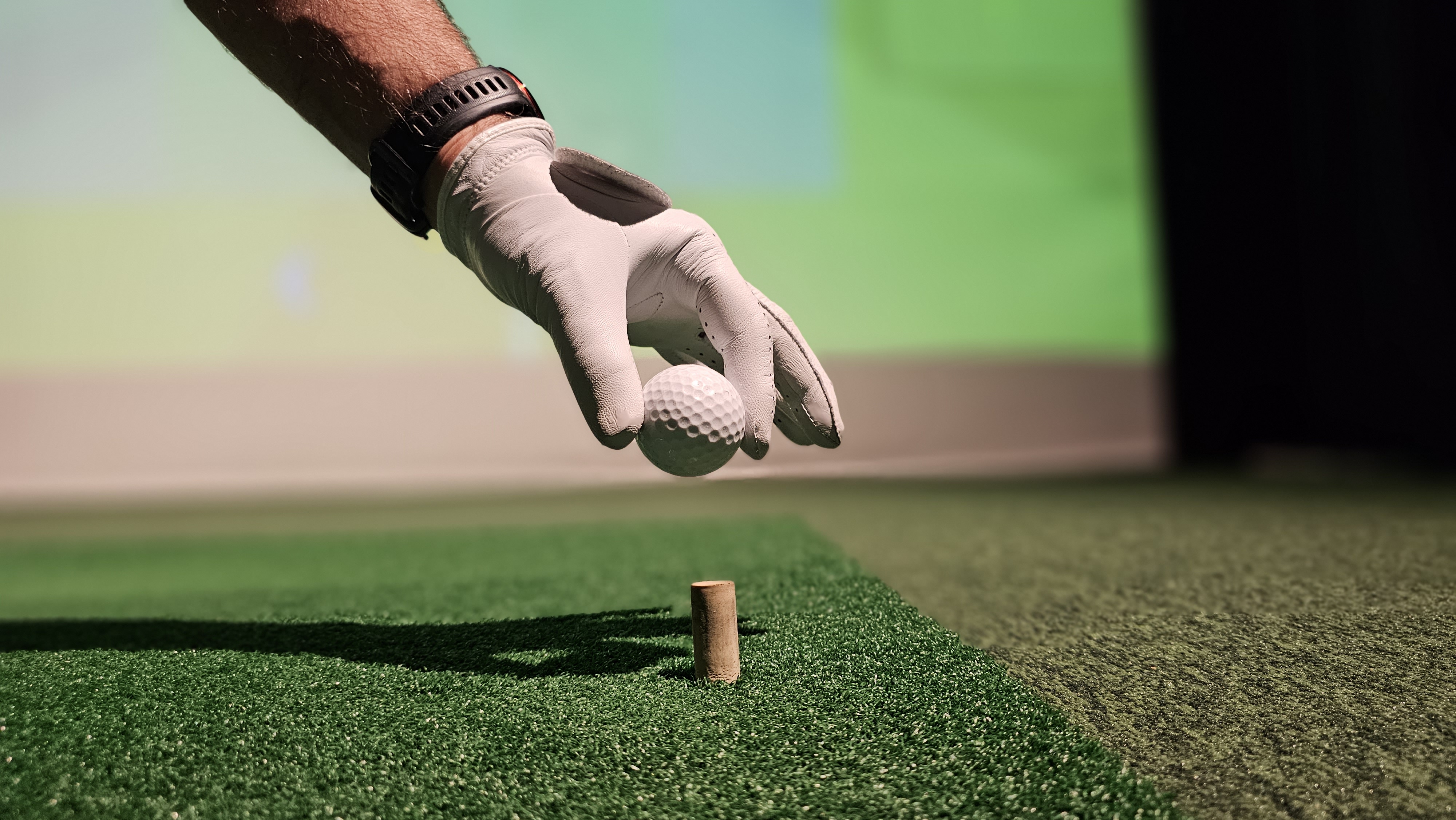
Panasonic Projection Tech Powers Realistic Sports Simulation Games
“Simulation is only as good as the eye perceives,” says Jason Karol of Panasonic. “Our mission is to provide visual systems that captivate and immerse the user within the content and transport them.” That’s exactly what Panasonic projection technology has been doing.
For years, Panasonic has been the projection technology partner of Full Swing Golf, who create golf simulators perfect for any environment. This helped lead to the current partnership with TGL. For the So-Fi Center, Panasonic Projector & Display Americas is providing nine PT-RQ50K 4K projectors, each one delivering 50,000 lumens of brightness and native 4K resolution. They promise to provide stunning color, details, and intensity, helping to blur the line between physical and virtual play. Panasonic will also work with TGL’s operations and AV technology teams to continue innovating and enhancing the league’s visual storytelling.
While that’s an example of simulator technology on the largest scale, Panasonic has projectors to cover any venue:
- High-lumen projectors that work even in bright spaces.
- Various throw ratio and lumen output combinations.
- Optical zoom and lens shift.
- REQ/REZ series projectors optimized for curved screens.
- Durable designs for longer life and less maintenance.
- Eco-friendly designs that result in greater sustainability.
Get in the Game, Powered by Panasonic
Sports simulators are likely to continue gaining popularity as more players discover their potential, and Panasonic Projector & Display will be there to help power these experiences. Panasonic projectors are ideally suited to provide the top-of-the-line projection technology and flexible options to power sports simulators in any environment.
Learn more about Panasonic’s audiovisual solutions for sports simulation.
