

One of the biggest challenges modern fleets face is the volume of data they generate. Between telematics platforms, IoT sensors, onboard mobile devices, cameras, dispatch systems, and the vehicles themselves, a constant stream of operational information is being generated. However, many organizations still lack the ability to harness all that data into a single cohesive fleet management software platform that provides a complete picture of operations.
Collecting data means very little if nothing is done with it. Today’s fleet leaders need a way to overcome the challenges posed by disconnected systems and operational silos if they hope to turn collected data into meaningful action and improvements. As more fleet managers begin to understand this need, demand continues to increase for more integrated approaches to fleet management software and connected vehicle operations.
Whether a fleet supports public safety agencies, utility field operations, construction teams, or some other type of mobile field operation, fleets require centralized visibility, proactive monitoring, and decision-making power at the edge.
Why Your Legacy Fleet Management Software Can’t Keep Up
Few organizations have the luxury of establishing their connected fleet technology all at once. Most do it over time by layering on new technologies as needs arise. For example, a telematics platform might handle vehicle GPS tracking, while another platform deals with cameras, a third monitors feedback from IoT sensors, and so on. As time goes on, a patched-together software stack may end up hampering efficiency more than it helps it.
For instance, public sector fleets must often contend with aging assets, disconnected systems, inconsistent data collection, and limited visibility around lifecycle costs, according to a report from the U.S. Government Accountability Office. Some government or private sector fleets may rely on dozens or more interconnected systems in their daily fleet operations for vehicle tracking, maintenance, fuel tracking, route optimization, driver safety, and more, according to research from IBM. While each platform may have some individual value on its own, running on dozens of disconnected solutions creates operational silos that can slow the pace of important decisions — or worse, keep data from decision-makers entirely.
To put it in context, fragmentation can create numerous challenges across functions, such as:
- Fleet managers may spend their time accessing numerous systems trying to gain a cohesive view of fleet operations.
- IT teams get bogged down due to supporting overlapping systems and managing tenuous integrations.
- Maintenance departments have trouble getting real-time equipment data.
- Procurement teams juggle costs for purchases and subscriptions across dozens of vendors.
- Operators must learn a variety of systems and attempt to switch between them effectively.
Once upon a time, a lack of data was the biggest problem. Now, the issue is that there is an overwhelming amount of data, and much of it remains isolated within specific systems. As fleet managers strive to move forward into a more modern, connected fleet space, they need integrated fleet management systems that can consolidate all of this data while reducing hardware sprawl and overall complexity.

Visibility Just Isn’t Enough Anymore
Visibility solutions were revolutionary when they hit the market, helping fleet managers see their assets in near real time — a big jump from relying solely on dispatch and phone check-ins from the road. GPS technology was the primary driver of that change and still remains important, but modern fleets require even more in-depth asset-tracking capabilities.
Fleet vehicles were once highly mechanical, which left only a limited number of things that could go wrong in transit. The vehicles that drivers use today are augmented with an overabundance of digital hardware and software components that drive efficiency and enhance usability, but this evolution in vehicle technology also means many more things can go wrong.
With fuel and operating costs on the rise, fleet managers need to keep assets in motion. A single unexpected vehicle or equipment failure can disrupt schedules, increase costs, and negatively impact customer relationships. For this reason, more fleets are turning toward real-time fleet asset management software to proactively monitor equipment health, fueling activity and usage, and driver activity.
Police, fire, EMS, and utility fleets, for example, must coordinate responses across agencies, vehicles, and systems. Without a cohesive view of fleet health and activity, these deployments can become complex very quickly, and efficiency may suffer as a result.
For these reasons, among others, fleet technology is evolving to include predictive analytics, real-time monitoring and reporting, and integrated intelligence capabilities. Fleet leaders now expect their technology investments to not only collect data but also provide context for it that enables meaningful action.
TOUGHCommand Offers Unified, Edge-Enabled Fleet Management Software
Instead of adding more standalone hardware into vehicles and piling extra software layers onto the existing tech stack, fleet leaders are increasingly exploring ways to maximize the rugged edge devices they already have deployed throughout their fleets. By simplifying the connected vehicle ecosystem using existing mobile solutions, fleets can reduce hardware sprawl and technical debt.
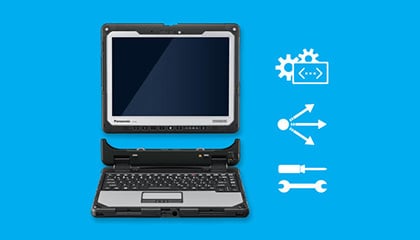
Panasonic Connect’s TOUGHCommand platform is built in recognition of the fleet sector’s movement toward centralized, edge-capable fleet operations. The Software-as-a-Service (SaaS) platform uses the TOUGHBOOK® rugged laptops and 2-in-1s already mounted inside vehicles to unify data coming from a variety of fleet management software solutions, including:
- Telematics vehicle tracking
- IoT device monitoring
- Asset tracking software
- Emergency vehicle preemption
- Operational data management
Since the platform builds on existing TOUGHBOOK deployments to unify operational data within a single environment, fleet managers don’t need additional dedicated hardware to pull data out of silos and centralize it. TOUGHCommand’s open API architecture supports integration with computer-aided dispatch (CAD) systems, traffic infrastructure, maintenance solutions, and a broad range of other common public and private fleet management technologies.
As organizations look to strike a balance between efficiency and safety in an increasingly complex fleet environment, unified fleet management software capabilities from TOUGHCommand offer a path forward that simplifies connected fleets without sacrificing control or minimizing insights.
Turn Your Siloed Fleet Data into Actionable Insights
In the age of vehicle telematics, artificial intelligence, and connected fleets, fleet ecosystems will only become more complex. But technology itself does not guarantee improved outcomes.
Modern fleet operations need to ensure that connected fleets can deliver real-time insights and centralized data that can be used across functions and departments. If organizations continue to rely on fragmented, siloed systems, they will find it difficult — or even impossible — to scale effectively and manage costs in the near future.
Unified, edge-enabled platforms represent a growing trend toward operations in which data is not merely collected but contextualized and acted upon.
Learn more about how TOUGHCommand helps fleets simplify disconnected data and reduce hardware complexity.
Looking For More?
-
.jpeg?width=420&height=240&name=Field%20Services%20(420x240px).jpeg)
Field Services Solutions
-
TOUGHBOOK Services
-

Rugged Laptops & Tablets