U.S.-Based Contact Center Outsourcing

When customer calls are missed, delayed, or inconsistently handled, the impact extends beyond the call. Panasonic Connect helps close those gaps with U.S.-based contact center outsourcing that improves responsiveness, captures more opportunities, and keeps service consistent.

U.S.-Based Support | Human-Led, AI-Supported | Flexible Coverage | Multilingual Service | Transparent Performance

What Is Contact Center Outsourcing?

Contact center outsourcing allows a business to rely on an external partner for some or all of its customer calls and interactions. Services may include live answering, appointment scheduling, after-hours coverage, technical support, outbound follow-up, and support across multiple customer channels.

Team reviewing call performance metrics on a dashboard during a meeting

Businesses often consider customer service outsourcing when:

  • Customer calls and other interactions are being missed or delayed
  • Internal teams cannot keep pace with rising or fluctuating demand
  • Coverage is limited during peak periods or after business hours
  • Hiring, training, and managing additional employees creates operational strain
  • Service quality varies across teams, locations, or customer touchpoints
  • Employees are pulled away from higher-value responsibilities
  • Poorly handled inquiries lead to frustration, escalation, or churn
Effective contact center outsourcing provides more than added capacity. The right partner helps improve responsiveness, maintain consistent service, adapt as demand changes, and provide clear visibility into performance.

The result is a customer support model that can grow with the business without adding more day-to-day operational burden.

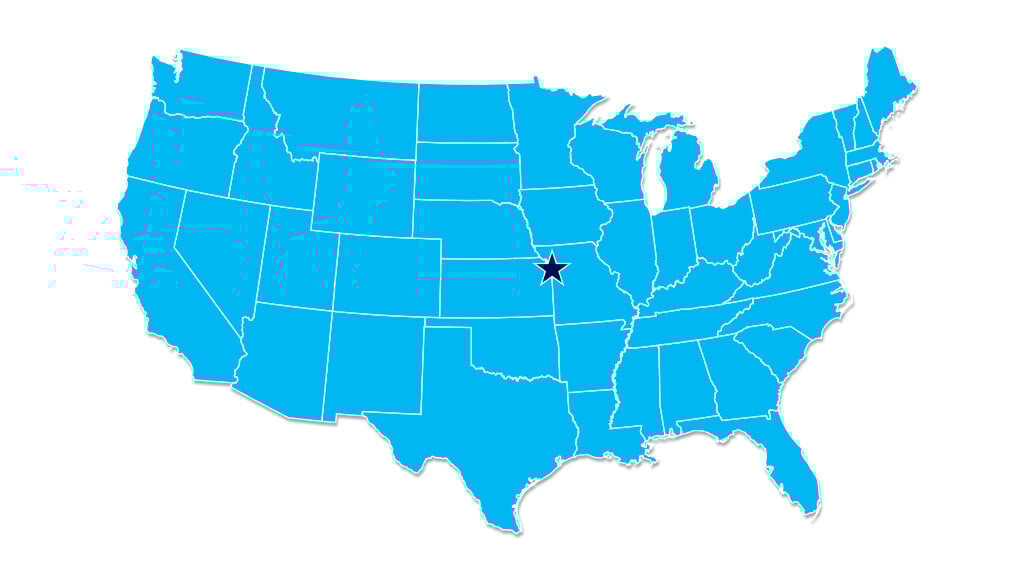
Kansas City HQ on US Map

U.S.-Based Contact Center Services Built Around Your Business

Panasonic Connect helps growing, service-based businesses strengthen customer support without sacrificing quality, visibility, or control. More than a source of added capacity, our U.S.-based contact center, operating from Kansas City, works as an extension of your team, aligning support with your workflows, customer expectations, and business goals.

Contact center services include:

  • Live answering and inbound call handling
  • Overflow and peak-demand coverage
  • After-hours and extended support
  • Dispatch, appointment coordination, and scheduling
  • Outbound follow-up and customer outreach
  • Specialized technical support
  • Omnichannel customer support
  • Support in English, Spanish, Portuguese, and Canadian French

Our Performance vs. Industry Average

4.6 out of 5 based on our average customer survey score

4.6 out of 5 average customer survey score

  • sec

    Average Speed of Answer

    Industry Average: 74 sec

  • 0.%

    Abandonment Rate

    Industry Average: 7%

  • %

    First Call Resolution

    Industry Average: 70%

*Metrics based on Panasonic Connect Managed Services operational data for FY25. Results may vary by program and service configuration.

Why Panasonic Connect?

  • Your customers should receive an experience that feels connected to your business, not handed off to a disconnected third party. Our teams work to understand your brand, processes, workflows, and customer needs so they can represent your organization with clarity, professionalism, and care.
  • Customer journeys extend across phone, email, SMS, and chat. Our omnichannel support helps capture and manage those interactions consistently, so customer needs and business opportunities are less likely to be missed.
  • We do not measure success by interaction volume alone. Quality assurance, training, and performance management help improve the outcomes that matter to your business, including responsiveness, consistency, customer satisfaction, and effective resolution.
  • Experienced agents remain at the center of each customer interaction. AI-supported tools can help improve speed, accuracy, and continuity, while human judgment and empathy remain essential for nuanced questions, technical issues, and sensitive customer needs.
  • Clear reporting and performance visibility show how customer interactions are managed without requiring day-to-day oversight. We monitor KPIs, agent performance, and service quality to identify opportunities and sustain improvements.

    Based in Kansas City, our U.S.-based contact center also gives customers the opportunity to visit, meet the people supporting their business, and see the operation firsthand.

How Does Contact Center Outsourcing Work?

A successful outsourced contact center engagement begins with understanding how customer interactions are currently handled, where support gaps exist, and what better performance should look like.
  • Step 1: Understand Current Contact Center Operations

    The first step is identifying where delays, missed interactions, coverage gaps, or inconsistent processes are affecting customers and internal teams.

    This evaluation may consider:

    • Interaction volume and peak periods
    • Hours of coverage
    • Common customer needs
    • Existing workflows and systems
    • Escalation requirements
    • Service and performance goals
  • Step 2: Align Goals and Workflows

    The support model should reflect the needs of the business rather than force the organization into a standard package.

    Depending on the operation, the model may include dedicated or shared agents, inbound or outbound support, business hours or extended coverage, multilingual service, appointment scheduling, dispatch, or technical assistance.

    Workflows, handoffs, systems, and escalation paths should also be defined before support begins.

  • Step 3: Measure and Continuously Improve

    Once the program is in place, interactions and performance should be monitored to identify opportunities for improvement.

    Reporting, quality assurance, agent training, and workflow refinements help maintain service quality and allow the support model to evolve as customer needs and business priorities change.

Contact Center Outsourcing FAQs

  • Outsourcing customer service may make sense when customer demand is increasing, interactions are being missed, coverage is needed outside standard business hours, or internal teams are struggling to maintain consistent service. It can also help when the hiring, training, and management of additional employees becomes difficult or when seasonal and fluctuating demand makes staffing unpredictable.
  • Contact center outsourcing can benefit service-based businesses that rely on timely, consistent customer calls and other interactions. This may include organizations managing appointments, dispatch, technical questions, customer outreach, emergency or after-hours needs, and fluctuating service demand.
  • An outsourced contact center can add or adjust support capacity as business needs change. Customer support outsourcing can help organizations manage seasonal peaks, extended operating hours, expansion, or rising interaction volume without continually hiring and restructuring internal teams.
  • Contact center services can often be structured around the tools, systems, and workflows a business already uses. The specific approach depends on the organization’s technology, security requirements, processes, and scope of support. These needs should be reviewed during the planning and implementation process.
  • U.S.-based agents can provide clear communication and an understanding of local customer expectations. Human-led support is particularly valuable when interactions require empathy, judgment, detailed problem-solving, or careful representation of a company’s brand. Technology can support the agent, but it should not replace the human connection customers need during complex interactions.

Your Customer Experience Should Support Growth, Not Limit It

Strengthen how your business responds to customer interactions with a partner focused on quality, performance, and continuous improvement, not just added capacity.
* Required.

PCONA chatbot